
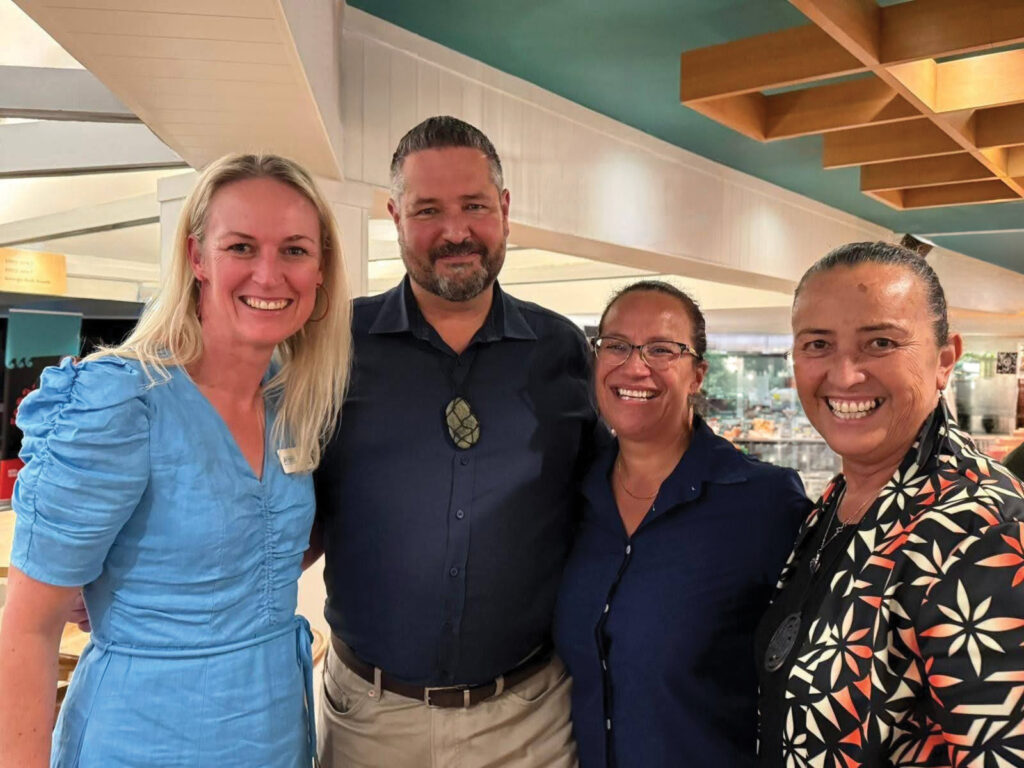
This year’s Rural Teaching Principals Conference was held in late May in Auckland. Around 300 leaders from some of New Zealand’s smaller schools and kura delved into the unique issues these principals face while navigating the choppy seas of the current education environment.
NZPF President Jason Miles – who started his principal career at View Hill School, a picturesque, two-teacher country school under the Southern Alps near Oxford – spoke on Day 2 about the importance of professional calm and collective discipline as we work through this period of significant educational change together. He talked about a profession under pressure, up against an avalanche of change brought on by the education system reforms.
All principals value high-quality curriculum, clear assessment, and strong accountability; however, these must be implemented in ways that honour our professional expertise, uphold Te Tiriti o Waitangi, and recognise the realities of schools in diverse contexts. That is why Jason’s reminder to “be responsive, not reactive” matters. It calls principals back to considered leadership and asks us to pause; to plan, engage teams, communicate clearly with whānau, and implement sustainably. In a time when it can feel as though schools are being asked to “chase the cheese,” Jason reminds us that school leadership is, at its heart, about people, relationships, professional judgement, and the conditions schools need to serve their communities well – and we need to protect that.
Jason described how rural principals lead schools that are often anchors of their communities. They are expert generalists, often carrying multiple roles at once: curriculum leader, learning support coordinator, board adviser, property manager (the list goes on), while facing small staff numbers, isolation from services, and responsibilities well beyond the traditional image of principalship. But rural principals are not peripheral to the system; they are central to its identity, resilience, and equity. They lead schools deeply connected to place —–to whenua, marae, farms, and generations of local knowledge.
This dual reality matters. Rural schools are places of innovation and relational strength, but also places where inequities sharpen if resourcing, staffing, and specialist services aren’t maintained. The rural principal’s role is both local and national: protecting community mana and helping the system understand what policy looks like in a composite classroom with one teacher-principal at the end of a gravel road.
Every principal in Aotearoa can learn from rural leadership. Rural principals lead with a clarity that comes from necessity. They know their learners, they build partnerships because they have to, and they treat inclusion not as a slogan but as daily practice. This is why rural representation within NZPF and other networks matters: their experience challenges assumptions about equity, scale, staffing models, and dramatically illuminates the holes in any “one-size-fits-all” education policy.
A strong theme in Jason’s address was the importance of collective professional voice and the vital role of rural principals in the chorus. He outlined how NZPF’s has worked alongside other professional associations to ensure educators’ voices have been heard and implementation expectations have been reconsidered. He also highlighted NZPF’s 2026 General Election Manifesto, which amplifies the profession’s calls for greater educational stability, equitable resourcing, and a broad and inclusive curriculum. When principals speak together, such as through their local associations, sector groups, rural networks, and the NZPF, they are supporting their communities, their colleagues, and the wider education system. Silence, Jason said, leaves policy to be shaped without the wisdom of practice.
The message from the conference was one of determination, not despair. The pressures are real, but so is the strength of the profession. Principals must lead carefully and courageously, supporting staff, serving communities, upholding Te Tiriti o Waitangi, and keeping tamariki and rangatahi at the centre. They also need to look after one another. For urban and larger-school principals, listening to and learning from our rural colleagues strengthens our understanding of the system we all serve.