
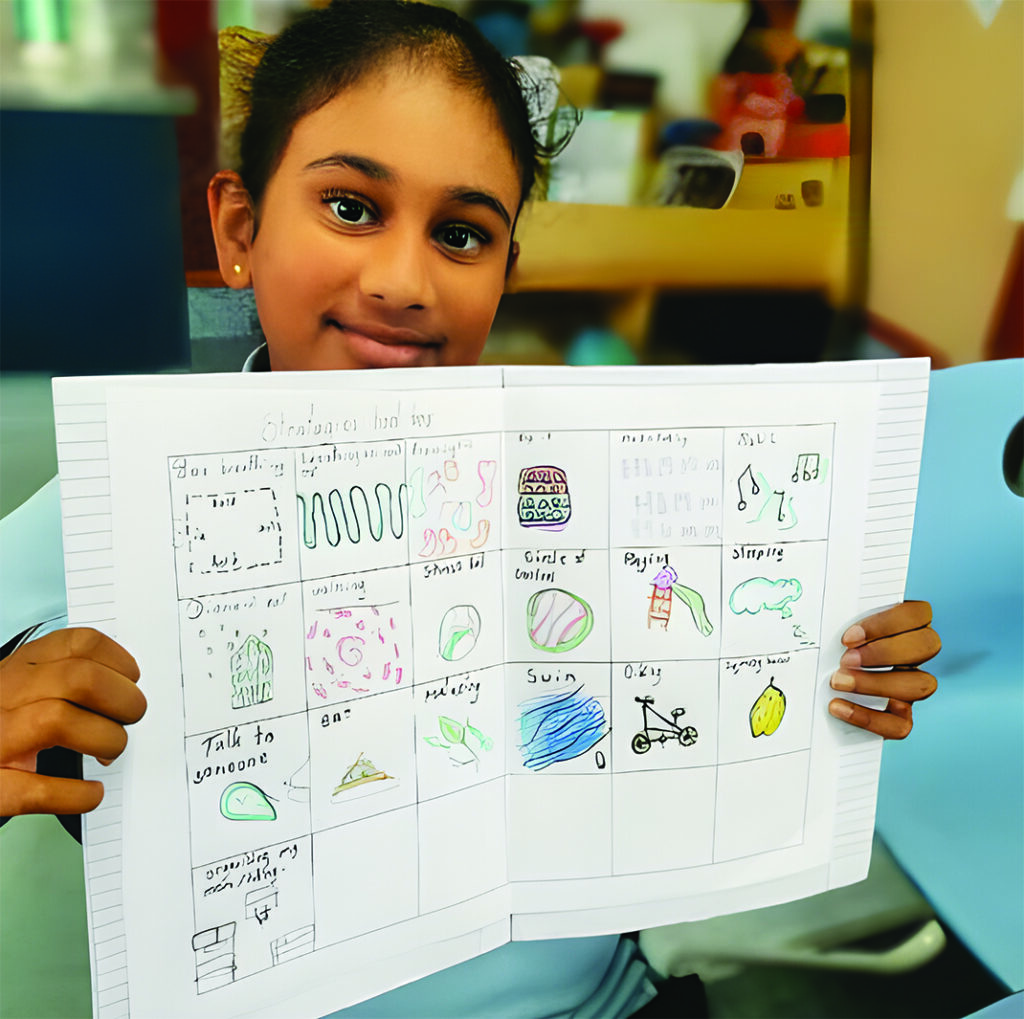
The modern classroom is more than a site for delivering content—it is a relational space where the brain, body, and heart come together in the service of learning. As educators, we’re learning – through both research and reflection – that the most powerful teaching happens when we hold thinking and feeling side by side. In these classrooms, young people are not only acquiring knowledge, but developing the emotional tools and relationships that help them apply it meaningfully in their lives.
At St Joseph’s Catholic School in Paeroa, this integration of head and heart is not just a philosophy – it’s embedded into practice. Over the past two years, the school has taken a considered and community-led approach to Social and Emotional Learning (SEL). The result is a school culture where students learn to understand their emotions, relate respectfully to others, and build the cognitive flexibility and confidence to thrive.
Their Cognitive-Affective Learning (CAL) framework illuminates that deep learning happens when cognitive and emotional systems work in harmony. When teachers recognise the impact of emotion on attention, memory, and motivation, and intentionally create emotionally safe and culturally responsive environments, learning is not only possible – it flourishes (Immordino-Yang, 2016; Cognitive-Affective Learning, 2025).
St Joseph’s journey blends what we know from neuroscience, emotional intelligence, trauma-informed practices, and high-impact teaching into a cohesive model of whole-child education – where relationships, routines, and rigorous learning experiences intersect.
Listening first: Where the journey began
Two years ago, the school asked: what do our tamariki really need to thrive? Through deep consultation with students, whānau, staff, and parish, a clear theme emerged – our children needed support with emotions, stress, and social challenges (Education Gazette, 2025).
Instead of a quick fix, St Joseph’s took a thoughtful, research-informed approach. They drew on neuroscience to understand how stress affects learning. They grounded their decisions in local culture and their values. And they worked alongside EI specialists to co-construct a developmental, culturally anchored approach that put relationships at the centre.
This starting point reflects a foundational insight from the CAL model: the conditions for learning are as important as the curriculum itself. When students feel they belong, are known, and are emotionally regulated, their brains are better able to process, retain, and transfer learning (Darling-Hammond et al., 2019).
Interweaving head and heart: Teaching SEL through a learning lens
Rather than placing SEL in a separate box, St Joseph’s teachers deliberately teach emotional and relational skills in tandem with cognitive ones. Each stage of their SEL programme is developmentally aligned, reflecting both the brain’s readiness and the emotional demands of that age group.
Years 0–2: Foundations for regulation and belonging
In the first few years of learning (Years 0–2), children build essential skills in literacy and numeracy. During this time, they also start to understand and name their emotions, learning basic strategies for self-awareness. Teachers use tools like visuals, storytelling, and structured routines to help children connect emotions to language and behaviours. This creates consistency and comfort, which are crucial for young children as they begin to form their sense of identity and safety.
When children can regulate their emotions and feel a strong sense of belonging, they’re more able to focus on learning. Emotional stability makes it easier for them to listen, follow instructions, take turns, and engage in learning activities. Emotional regulation isn’t a distraction from academic progress – it actually helps it. A calm, connected child is better able to focus on important tasks like decoding words, recognising symbols, and developing oral language skills. In this way, emotional regulation supports learning, rather than competing with it.
By consistently modeling and practicing emotional and academic skills, teachers help children not only develop emotional literacy, but also reduce cognitive overload. This allows them to focus more effectively on core learning tasks (Centre for Education Statistics and Evaluation, 2017). These early experiences don’t just teach specific skills – they also build the foundation for later learning, helping children develop the ability to self-regulate, pay attention, and cultivate a joyful curiosity about the world around them.
Years 3–5: Building readiness for deep learning
In the middle years, students develop a more detailed understanding of how their brains work – particularly in relation to stress and regulation. They learn about the roles of the amygdala and prefrontal cortex and explore practical strategies to calm their nervous system and regain focus when emotions feel overwhelming.
These insights don’t sit in isolation – they create the foundation for learning. Students who can manage their emotions are more receptive to teaching. Their attention lasts longer. They are more able to participate in group learning and respond to feedback. In other words, emotional readiness becomes cognitive readiness.
This foundational self-regulation supports the effectiveness of high-impact teaching strategies: clear modelling, guided practice, targeted feedback, and metacognitive reflection. When students can name what’s going on internally, they are far better equipped to take risks in learning, persist through challenge, and engage deeply with content (Darling-Hammond et al., 2019; CESE, 2017).
Years 6–8: Navigating pressure and strengthening connection
For senior students, the focus shifts toward the relational and emotional complexity that emerges in early adolescence. Students explore anxiety, identity, and the social pressures that can shape behaviour – particularly in peer relationships. The learning is real, relevant, and personal.
Through practices like journaling, role play, structured discussion, and leadership roles, students learn how to stand steady in their values, set healthy boundaries, and support others with empathy. They begin to understand how anxiety might show up in themselves or their peers, and what relational tools they can draw on – whether that’s breathing, honest dialogue, or simply stepping back.
This stage is not just about managing stress; it’s about cultivating social wisdom. The relational focus mirrors what the science of learning and the CAL framework both emphasise: learning is a deeply social act. When students feel connected, trusted, and safe with one another, their learning – and their wellbeing – are strengthened (Immordino-Yang, 2016).
Peer mentoring and student-led initiatives at this level also give learners the opportunity to practise leadership in meaningful, emotionally attuned ways – deepening their sense of purpose and reinforcing their emotional competence in action.
Senior students develop deeper tools for managing pressure, anxiety, and conflict. They use techniques like journaling, box breathing, and peer support roles to strengthen self-management and contribute positively to others.
They begin leading playground relationships and mentoring younger peers – giving their learning relevance, responsibility, and emotional resonance. This reinforces what CAL describes as purposeful learning anchored in aronga (direction), where students know not just how to act, but why it matters.
Teaching that connects: Routines, modelling, and trust
The real magic of the CAL approach is the how of teaching. Across the school, teachers use consistent routines and explicit instruction to guide students from surface understanding to deep application.
Emotion check-ins, shared vocabulary, co-constructed strategies, and predictable classroom rituals help students feel safe and engaged. This structure is particularly vital for learners with trauma histories, whose brains seek consistency to reduce threat and enable reasoning (Perry & Szalavitz, 2006).
Through the CAL lens, we see how cognitive rigour and affective connection are not opposites – they amplify one another. Students are encouraged to think about thinking, to connect learning across subjects and emotions, and to see their own role in the learning process.
Whānau and community: Extending the learning loop
True to the CAL principle of whanaungatanga, St Joseph’s extended the learning journey into the home. Whānau were brought into the conversation early, helping identify needs, shape goals, and practise strategies at home.
This two-way partnership has led to increased emotional dialogue at home, consistency in expectations, and stronger school-home connections. It highlights that powerful learning isn’t confined to classrooms – it flows through relationships, language, and daily interactions.
Anchoring in identity: Spirit, culture, and character
St Joseph’s SEL programme is infused with the school’s special character. Emotional development is not presented as a separate curriculum – it is part of living with faith, humility, and love. Students are reminded that their worth is not in their performance, but in their relationships.
By aligning emotional intelligence with Catholic values, and teaching it through structured, evidence-informed practice, the school brings depth and authenticity to learning. This reflects CAL’s call to honour learner identity – spiritual, cultural, emotional, and cognitive – as inseparable dimensions of success.
The results: Learning that lasts
Since implementing their programme, the school has seen measurable shifts: students more confident in naming and managing their emotions, greater empathy in social interactions, and improved focus and participation in learning.
These aren’t just signs of a wellbeing programme – they’re signs of a learning culture built on trust, agency, and connection. Students know they belong. They know how their brain works. They know how to learn.
Principal Emalene Cull reflects
‘Tamariki are learning that emotions are not something to fear – they are something to understand. They feel heard, valued, and empowered to navigate life with confidence, empathy and strength’ (Education Gazette, 2025, p. 26).
Final reflections: Learning that feels, connects and grows
St Joseph’s offers a powerful reminder that emotional and academic development are not separate agendas. When we integrate them, using the best of what we know about how the brain learns and how humans connect, we foster learners who are not just capable – but deeply equipped.
This is the heart of their Cognitive-Affective Learning framework: an integration of thought and emotion, culture and intellect, connection and challenge – interlaced to create a dynamic, unified approach.
References
Archer, A. L., & Hughes, C. A. (2011). Explicit instruction: Effective and efficient teaching. Guilford Press.
Centre for Education Statistics and Evaluation. (2017). Cognitive load theory: Research that teachers really need to understand. https://www.cese.nsw.gov.au
Chafouleas, S. M., Johnson, A. H., Overstreet, S., & Santos, N. M. (2016). Toward a blueprint for trauma-informed service delivery in schools. School Mental Health, 8(1), 144–162.
Cognitive-Affective Learning. (2025). Cognitive-Affective Learning: A Thriving Mind in a Connected Heart [White paper].
Darling-Hammond, L., Flook, L., Cook-Harvey, C., Barron, B., & Osher, D. (2019). Implications for educational practice of the science of learning and development. Applied Developmental Science, 24(2), 97–130.
Education Gazette. (2025, May 26). Weaving emotional intelligence into everyday learning. https://gazette.education.govt.nz
Immordino-Yang, M. H. (2016). Emotions, learning, and the brain: Exploring the educational implications of affective neuroscience. W.W. Norton.
Immordino-Yang, M. H., & Damasio, A. (2007). We feel, therefore we learn: The relevance of affective and social neuroscience to education. Mind, Brain, and Education, 1(1), 3–10. Perry, B. D., & Szalavitz, M. (2006). The boy who was raised as a dog. Basic Books. Victorian Department of Education. (2020). High impact teaching strategies: Excellence in teaching and learning. https://www.education.vic.gov.