
Building Schools Where Background Doesn’t Dictate Destiny
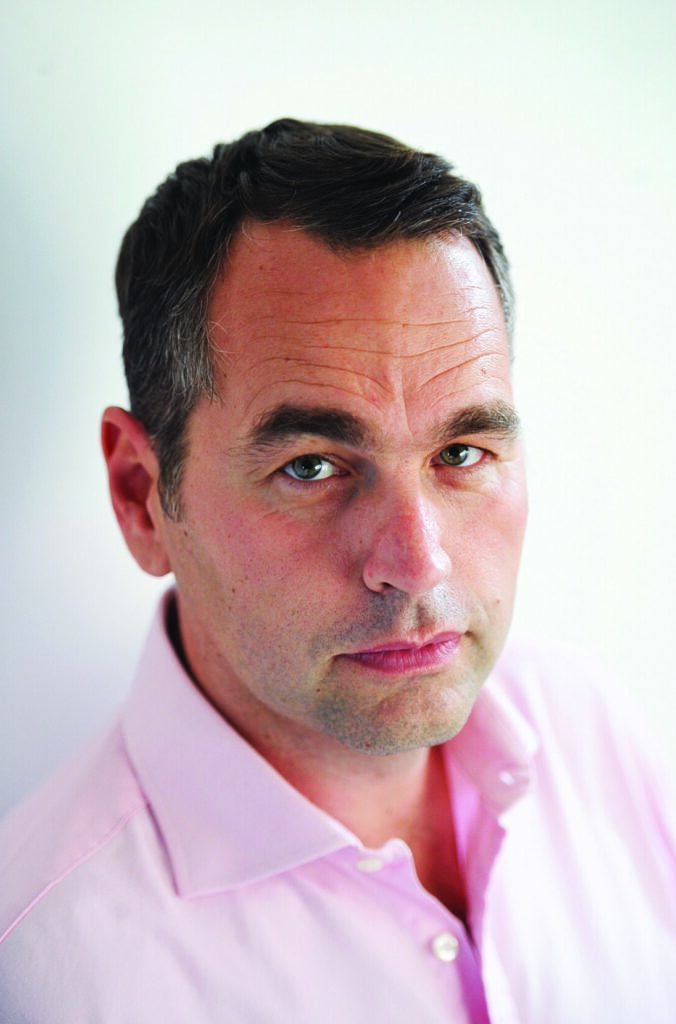
In Britain, I’m often introduced as the binman turned professor. It’s a story that surprises people, particularly in the country known for its rigid class system. But I share it wherever I speak with school and teacher leaders – because it speaks to a truth that sadly, applies to all societies across our world: too many children are still held back by the circumstances into which they were born. I grew up in a part of West London in the shadows of Heathrow Airport, a place known for its youth offenders’ prison. I left home at 15 with very little to my name. A teacher encouraged me to go back to school. A friend’s family took me in. My mum, who worked for the local council, helped me get holiday jobs – cleaning streets, collecting bins, washing dishes. During evenings I worked as an attendant in a petrol station. That was my classroom, too. I learned resilience, humility, how to get on with people and how to survive when there’s no safety net to fall back on. And I learned that talent lives everywhere in many different forms – in every neighbourhood, in every accent, in every child.
When I was awarded an OBE at Buckingham Palace from HRH the Queen for my work in education, I felt proud. Yet your history never truly leaves you. I still imagined a ghost from my past was going to tap me on the shoulder and say, ‘Lee, you don’t deserve to be here, go back to where you come from!’ It’s taken me a while to realise that my background isn’t something to be hidden – it’s a strength. It’s what fuels my mission to work with teachers across the world: to help level the playing field of education so that no child is defined by their postcode or their parents’ income.
The case for equity
Across the world, millions of children are being quietly left behind – not because they lack ambition, but because they face cultural and material barriers the system was never designed to help them overcome. A working-class boy from a London estate who doesn’t know the unwritten middleclass rules of the classroom. A girl from a poor village walking miles to school carrying her text books in Nairobi, or a teenager in Manila who spends her evenings looking after her siblings while classmates get help from private tutors. These children don’t lack ambition – they lack opportunity. These children don’t need to be fixed. The system does.
Too often, equity is treated as an optional extra – when in reality, it should be the central purpose of education. We can’t keep holding teachers solely responsible for solving the deep inequalities outside their classrooms. We need an approach that doesn’t allow so many children to leave school feeling like failures.
Equity is about giving every child the support they need to thrive – not just the same resources or the same expectations. It’s about recognising that not all children start from the same place. Some need more. Crucially, equity is a mindset. It’s a belief that all children – whatever their background – have potential, and it’s our job as educators to remove the barriers in their way.
The equity approach encourages us to look at children not through a lens of deficit – what they lack – but through a lens of potential – what they could become, if only we remove the obstacles in their way.
Four levers
In my talks and workshops with teacher leaders across the UK and internationally, I share four levers that can drive more equitable practice in schools: language, pedagogy, curriculum, and partnerships.
These are not just ideas – they are tools for change.
Strengths-based language
The language we use matters. The words that we speak transmit our values and reveal our inner assumptions.
When we label children as ‘disadvantaged pupils,’ we risk defining them by what they lack. Instead, I encourage schools to use terms like ‘children from under-resourced backgrounds’ or ‘pupils facing extra barriers to learning.’ That way, we focus on the systematic inequities they face – not the child.
Avoid terms like ‘hard-to-reach families.’ Ask instead: how can we be easier to reach? Talk about parent and community partnerships not engagement.
Truly inclusive teaching
Unconscious bias is a universal trait all humans have. Research shows that teachers often – without meaning to – give less detailed feedback, less eye contact, and fewer opportunities to children from lower-income homes, or children less like them. In every classroom meanwhile there are ‘hidden learners’ doing what so many pupils are good at doing: pretending to listen!
We can all make classroom practice genuinely more inclusive. It starts with reflective practice: watching each other teach, talking about hidden learners, and creating space for every child to be seen and supported.
Curriculum for all talents
Academic results are essential, particularly basic literacy and numeracy – but it’s not the whole picture of human life.
We must also value creativity, kindness, leadership, and resilience. The best schools I visit around the world celebrate all forms of human talent – not just those measured by grades. Arts and sports have inherent education value in themselves.
What we teach should reflect the children we teach. They should see themselves – and others – in the stories, texts, and topics we explore. Shakespeare belongs in every classroom, but so do local voices, contemporary artists, and unsung heroes from every culture.
What we teach should reflect the children we teach.
Nurturing relationships
Equity starts with mutually respectful relationships. That means partnerships with families and communities – not transactional interactions that treat parents and pupils as numbers not people.
One in five schools in England now run food banks. But those spaces can do more than provide food – they can be places where trust is built, where families feel welcome, and where schools become the heart of the community.
We should value time spent with parents as much as time spent on education statistics. The best insights don’t always come from spreadsheets – they come from real conversations in safe spaces.
Equity scorecard: A practical tool
To support schools in taking action, we’ve developed the Equity Scorecard – a simple self – evaluation tool that helps schools assess how well they are supporting children facing extra barriers. It’s already being used in secondary schools across the UK, with versions for primary and post-16 settings in development. What’s powerful is how willingly schools have embraced it – not because they were told to, but because they want to do better. Because they believe in what equity stands for.
My dream is simple: a school system where background never dictates destiny. Where every child – whatever their starting point – has the chance to discover their talents, fulfil their potential, and choose their own path in life. That’s not just a hope. With an equity mindset, it’s a promise we can make real.
References
Lee Elliot Major is Professor of Social Mobility atthe University of Exeter
Elliot Major, L., & Briant, E. (2023). Equity ineducation: Levelling the playing field of learning – a practical guide for teachers. John CattEducational.
Brooks, B., Sim, A., & Elliot Major, L (2024) TheEquity Scorecard, A new approach to assessingeducation equity in schools, South-West SocialMobility Commission.
Equity changed my life. And it can change the lives of millions more. As a school leader, you hold the power to reshape what’s possible for every child who walks through your gates.