
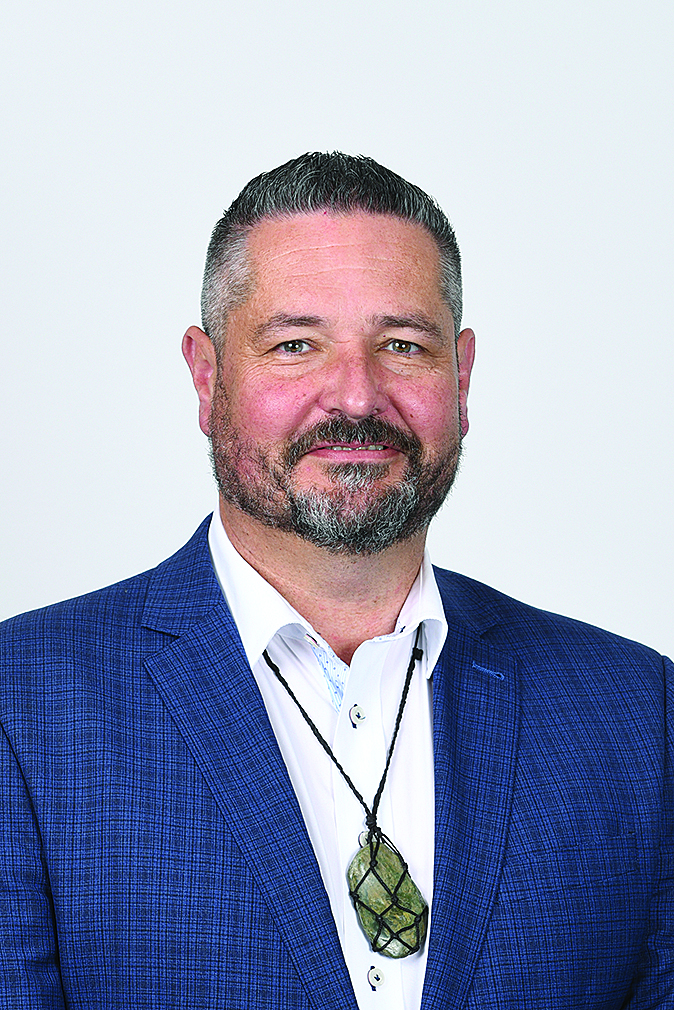
While there is so much on top for us at the moment including the overwhelming volume and pace of change from the Education Minister, my speech to regional principal association presidents and sector leaders at our NZPF Moot specifically focused on the importance of leading, learning, and advocating, threaded together by something we all know and love: good kai.
When principals and their leadership teams work together as a tight unit, the magic happens. Decisions are faster, collaboration is organic, engagement is authentic, and everyone’s moving in the same direction. Just like a kitchen needs different chef skills (the pastry expert, the grill master, the sauce specialist) effective school leadership thrives when diverse expertise comes together.
Your deputy brings strengths you don’t have. Your curriculum lead sees the gaps and opportunities that you miss. Your pastoral care expert connects deeply and understands students’ contexts differently. And your wider staff? They’re the ones making it all happen in classrooms every day. When leadership teams work side-by-side, these different skills complement each other naturally, creating something far better than any one person could achieve alone.
In our smallest schools, where it might just be a principal, one or two teachers, a teacher aide, and office support, this collaborative spirit becomes even more vital. These smaller teams can’t afford silos or separation. Every voice matters. Every skill counts. But here’s what makes small schools remarkable: they understand that their team extends far beyond the staffroom. Parents become reading helpers. Grandparents share stories and skills. Community volunteers step in where budgets can’t stretch. The kitchen in smaller schools isn’t just the staff, it’s the whole community working together – each bringing their unique ingredients, their family recipes, their past failures, their wisdom – to create something nourishing for tamariki. Small schools know that education works best when it’s a shared endeavour, when the boundaries between school and community blur, and when everyone contributes their gifts to the collective table.
Now imagine each school as its own restaurant. There are coastal kura, urban primaries, rural schools, kura kaupapa Māori, each making their unique context work for them, all while striving for the same purpose: the best learning and wellbeing outcomes for their tamariki. Every principal, like a head chef, knows their community, understands their students’ needs, and adapts their approach to their specific context. They’re the experienced operators on the ground, making it work day after day.
But the metaphor breaks down in troubling ways when, say, the owner (the Minister of Education, the Government) isn’t engaging or even consulting with principals about crucial operating decisions. Instead of drawing on the valued expertise of leaders who know what works and what is needed, the owner is mandating menu changes, dictating cooking methods, and imposing new rules without asking the people serving plates what they actually need. Tools like the SMART assessment are prescribed without adequate consultation and engagement. Charter schools are introduced despite sector objections. Curriculum changes roll out without genuine co-design. Te Tiriti responsibilities genuinely being enacted are ripped away from Boards. It’s a top-down model that ignores the reality that the best schools, just like restaurants, succeed when owners trust their staff, listen to their expertise, and support, rather than dictate, their craft.
And now, with the Education Act amendments, which NZPF made a substantial submission on, we’re seeing even more political overreach. Our sector is overwhelmed. Even our most experienced principals and teachers are struggling under the weight of constant mandates and compliance demands. It is threatening the very thing that makes education in Aotearoa New Zealand unique and valuable.
Our strength has always been the rich, diverse menu we offer: strong school–whānau partnerships, genuine care for children’s wellbeing, opening up all possibilities before our young people rather than narrowing their world. But what we’re seeing now is a push toward bland, standardised fare. This is a one-size-fits-all menu narrowly focused on reading, writing, and maths, driven by rubric assessments and reporting requirements, risks reducing our profession to teaching to the test. With high-stakes ERO reviews and the looming threat of league tables, we’re being forced to serve fast food when our communities deserve and need a rich, varied, nourishing educational experience.
Great restaurants don’t succeed by serving identical ultra-processed meals to every customer in line with their date of birth – regardless of taste, dietary, or cultural needs. They thrive by knowing their diners, adapting their offerings, and bringing consideration and care to every plate. Politicians, who are not in classrooms dealing with the consequences of their decisions, yet they are using education as a political football, dictating the menu without ever having cooked or tasted the product. Principals and teachers need to be valued for the important, complex, skilled work they do. They need to be trusted as the professionals they are, not controlled by those who’ve never stood in front of a class or led a school through challenging times.
You and I didn’t become educators to serve bland, compliance-driven education. We became educators to invigorate young minds, to offer rich experiences, to adapt our approach to each child’s needs; just as the best chefs create memorable dining experiences by knowing their craft and their context, respecting their ingredients, and caring deeply about those they serve.
Speaking of political footballs, I was once a sport-mad teenager who chose teaching over the chef’s life. Well, it’s time we blow the final whistle on this game where education gets kicked around every election cycle. Countries like Finland, Singapore, Ireland, and regions of Canada have achieved what we desperately need: cross-party commitment to educational stability. In Finland, major education policy is developed through broad consensus, ensuring continuity regardless of which party holds power. Singapore maintains long-term strategic planning in education that transcends political cycles. Ontario has seen periods where education improvement was treated as a shared societal goal rather than partisan territory. These systems understand that children can’t thrive when the rules of the game change every three years.
NZPF is strongly advocating and collectively calling for this kind of stability here in Aotearoa – not a standardised menu that never changes, but a commitment to evidence-based, collaboratively developed education policy that gives our tamariki the consistency they deserve. If politicians in New Zealand can talk about cross-party agreements in essential infrastructure and international trade deals, surely they can do the same for the education profession that builds our country’s future.
So here’s my challenge to fellow principals: we have an opportunity – and frankly, an obligation – to work together and demand genuine engagement in the face of this continued assault of ministerial education reform and overreach. Our collective voice matters. Remember, it is not how talented your chefs are or how exceptional your front-of-house staff is – if the owner constantly smothers them with micro-management and dictates their every move, the owner loses the opportunity to grow from their experience, harness their individual skills, and benefit from their innovation and wisdom. What you get instead is conformity. Every dish tastes the same. You get overwhelmed. Your kitchen staff drown in boring recipes and impossible prep lists. And worst of all, you get apathy – talented chefs who stop caring, who clock in and follow the manual because creativity and professional judgment have been systematically crushed. That’s where we’re headed if we don’t push back together.
We can’t let our education system become a chain restaurant serving reheated, pre-packaged meals devoid of Te Tiriti, and dictated by head office. We owe our tamariki, our staff, and our communities the robust, carefully crafted, locally responsive educational experiences that only skilled, trusted, empowered professionals can create. Let’s use our collective voice. Let’s demand a seat at the table. Let’s call for the kind of cross-party educational stability that allows us to focus on what matters rather than constantly adjusting to the political flavour of the month. Because the best kitchens, like the best education systems, are built on trust, collaboration, and respect for those who do the work.