Every second year, our school hall becomes an art gallery. Not metaphorically. We actually transform it. Every child produces a 2D and a 3D artwork. The walls and tables fill with colour, creativity, and wonderfully eclectic interpretations of whatever the teachers have been exploring. Children proudly explain their work. Whānau wander in wonder, stopping, talking, taking photos, and having many “wow” moments. Red stickers go on the pieces that sell, just like at a real gallery opening, and, because this is Beach Haven Primary, there has to be kai!
Protecting what matters
Art, Craft, and Kai is a tradition in our kura and my favourite event in the school calendar. Families know about it, children look forward to it, and many staff start planning their next masterpiece before the paint is dry. It has me thinking about the difference between protecting what matters and protecting the way things have always been done. In the rush to implement the next thing, do we spend enough time asking what we are actually trying to protect, and why? Is it because our children value it? Our whānau? Because it is part of our identity? Because it works?
Like our students, schools shouldn’t stand still. We should challenge practices that aren’t working and be ready to do things differently when the evidence tells us to. But the things that matter most rarely arrive packaged in a new policy document. Sometimes they are labelled superfluous or incongruent with the “right” change. That doesn’t make them less valued or valuable.
Every principal knows that moment another curriculum document lands on the desk. The temptation is to start comparing: what’s gone, what’s new, what do we have to do now? These are important questions. As we work through the latest changes and prepare for the science and social sciences drafts, I’m more interested in what opportunities are in front of us, what we are already doing well, and what we value.
Opportunities at the intersection
A new curriculum shouldn’t wipe the slate clean, nor make everything we’ve done irrelevant. Our professional responsibility is to understand what is new, interrogate it, then work out how it connects with what we know about our learners, our community, and effective teaching. That intersection is where the interesting work happens. A science investigation might lead to writing. A social sciences inquiry might lead to statistics. A story might lead to an exploration of culture, place or identity. Suddenly children aren’t learning disconnected knowledge; they are making meaning.
That’s what happens with Art, Craft, and Kai. The art isn’t “extra”, something we do once the important learning is finished. The making is the learning. There is language, mathematics, science, cultural connection, and complex problem solving. There is creativity, persistence, frustration, planning, and reflection. And there is a child making something that didn’t exist before.
We do young people a disservice if learning is governed by check boxes labelled English, mathematics, science, social sciences, arts and “other”. I advocate for a curriculum that makes space for the “other” and encourages kaiako to relish in the overlap. We need clarity about what children should know and be able to do, guidance for evidence-informed practice, and coherent curriculum design. But clarity about what matters isn’t the same as prescribing how it must happen. We can have common expectations without common experiences, and consistency without uniformity.
Our teachers know their learners, communities, and contexts. Their professional skill, finding the connections that make important knowledge meaningful for the young people in front of them, needs protecting. I don’t want my school’s response to curriculum change to be “Well, that’s the new curriculum, so we’d better stop doing what we used to do” or “The old curriculum was better, so let’s carry on as we were.”
Neither feels professional. I’d rather sit with a team and ask what our learners and whānau value and what we will hold onto. A curriculum gives us the framework. Our job is to bring it to life.
This isn’t an argument against change. It’s an argument for thoughtful change: seeing the opportunities rather than simply mourning what has disappeared, and being confident enough to hold true to our values.
Tradition and transformation
Children and communities need to know things are improving, but they also take comfort in some things staying the same. They need rituals that connect them to the children who came before, and a sense of belonging to something bigger than themselves.
What we celebrate tells children what we value. When every child’s artwork hangs in our gallery, the message is clear: creativity matters, effort matters, your ideas are worth seeing, and school isn’t just about getting the answer right. We talk about equity in terms of achievement, and we should, but belonging matters too. Being seen matters. These are harder to measure, but they are no less valuable.
Embracing the future and holding onto what makes our schools distinct is not an either/or. You can take the opportunity a new curriculum provides and still protect the traditions and relationships that give your kura its identity. You can strengthen knowledge while giving teachers autonomy, and use evidence without sucking the joy out of education.
When our hall becomes an art gallery, I know it is more than an exhibition. It is community, belonging, creativity, integrated learning, and teacher agency, beautifully overlapping and intersecting. It reminds me that we must keep moving forward, but we don’t have to leave everything behind. Our job as leaders isn’t to make sure our schools are always doing something new, but that they are always doing what matters.
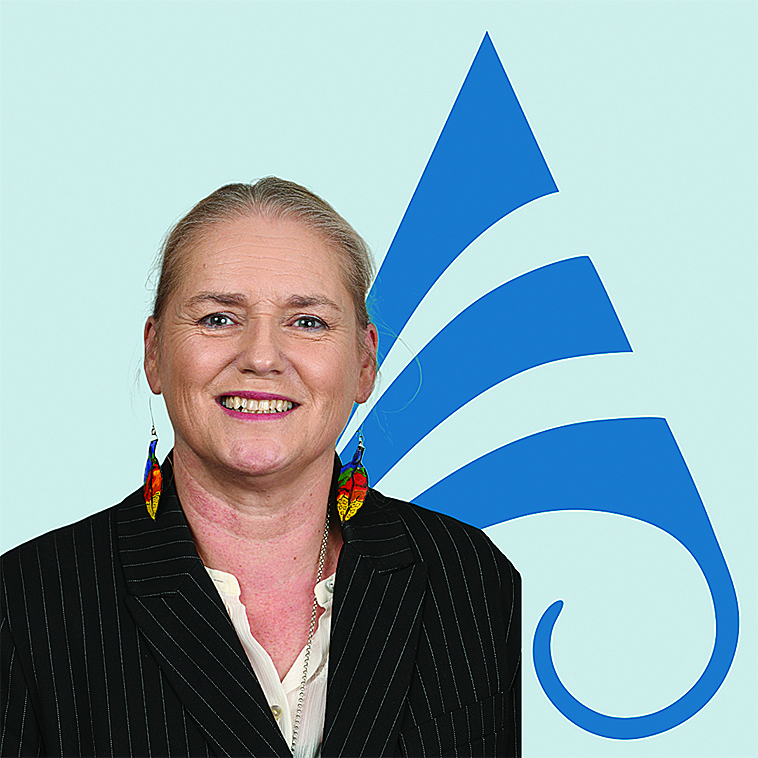
Steph is an avid reader and passionate writer with 23 years of school leadership experience across Otago, Canterbury, and Auckland. Her writing is inquisitive and curious, and always comes with a big injection of Beach Haven Primary goodness.