
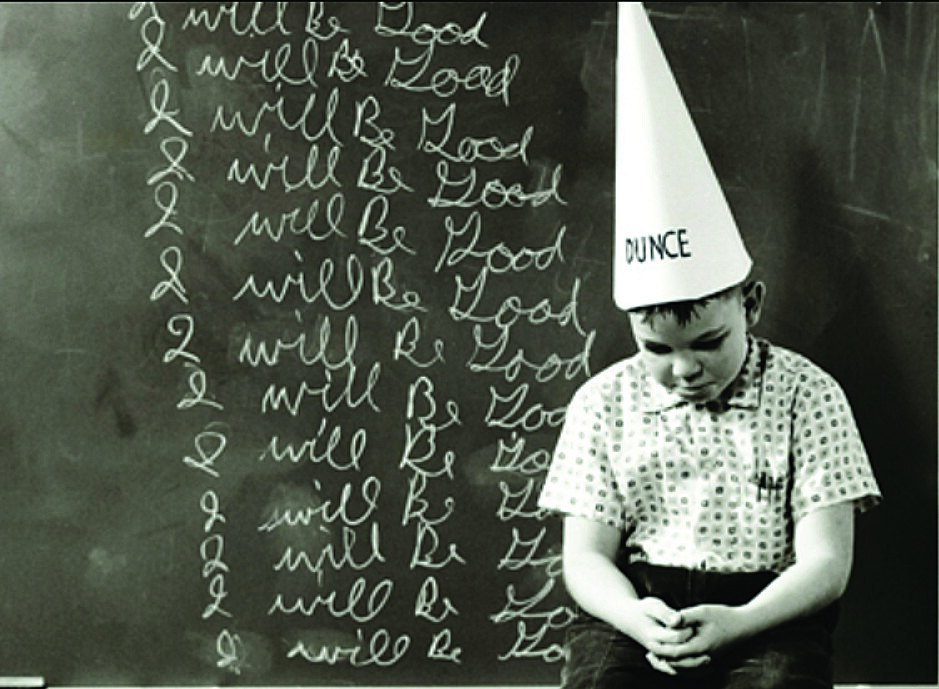
Feelings of shame are powerful.
As school leaders we work in a range of situations where levels of shame are high.
In my first term as tumuaki of a Y0–6 primary school I have spent time supporting a group of children struggling to regulate their emotions. As I have talked through incidents that have led to them getting angry, I have found that the moment when they lose their cool and lash out verbally and/or physically is frequently when someone else (often a friend) uses the word, ‘Shame!’.
There is often shame present for whānau we work with, when talking about the learning and behaviour of their tamariki and rangitahi. Often, because school is a safe place for children, we know a lot of detail about the home life of our students. In meeting with teachers and school leaders, whānau will need to talk about issues within their homes that have led to trauma and shame for their children such as marriage breakups, family violence, addiction, poverty, homelessness, grief and health issues. Parents may also be coming to terms with physical and neural challenges such as ADHD, ASD, dyslexia which are likely to have long-term impacts on the learning and behaviour of their tamaiti.
When supporting staff who are struggling with their mental health, discussions about workload, EAP access and sick leave are often the visible part of the iceberg. Underneath lie the feelings of shame and worthlessness that may have led to mental health challenges and also are exacerbated by seeking help. I don’t think I have ever supported a staff member to access mental health support or take leave without them saying, ‘I feel so embarrassed . . .’
As in so many areas, whilst most of us are not trained counsellors/psychologists/HR managers (for those of you who are rural principals insert plumber/pest controller/receptionist!) we often need to step into these areas and do the best we can.
So what do we need to know about shame?
Brene Brown says, ‘The difference between shame and guilt is the difference between “I am bad” and “I did something bad”.’ The Foundation for Post-Traumatic Healing and Complex Trauma Research explains the neuroscience of shame thus:
‘When faced with shame, the brain reacts as if it were facing physical danger, and activates the sympathetic nervous system generating the flight/fight/freeze response. The flight response triggers the feeling of needing to disappear, and children who have this response will try to become invisible. They will literally look smaller and their expressions become blank. In comparison, the fight response expresses itself as verbal and behavioural aggression by the embarrassed person towards the other who caused them to feel ashamed. The freeze response is what normally occurs when people are faced with trauma where they feel trapped and powerless. The freeze response allows us to survive situations where intolerable things are happening to us. The freeze response to shame has negative consequences too. The freeze response upsets our ability to think clearly, which results in beliefs that we are stuck in a situation where we have no power because we have something wrong with us.’
We are a PB4L kura. In a recent staff meeting, I spoke about the (inappropriate) use of shame as a behaviour management tool. The first task was, Think about a time when you were shamed/humiliated by a teacher . . . How did it make you feel? What did you learn? The room was a buzz of discussion – everyone had a story – none of them positive. We talked about times when we still use shame as a discipline tool by pointing out a child’s behaviour in front of others. Those teachers who use this strategy frequently, will definitely be familiar with flight/fight/freeze responses.
A useful way to understand responses to shame is to use Nathanson’s Compass of Shame model. Nathanson identifies four possible responses to feelings of shame, see page 36.
In recent years, we have heard a lot about trauma informed practice and as a result I think we are less likely to label children as ‘naughty’ or ‘defiant’ but rather to see their behaviour as a response to a trigger. Dolezal and Gibson argue for moving beyond a trauma-informed approach and towards what they call shame-sensitive practice.
‘Trauma has been positioned as a significant public health issue which many argue necessitates a trauma-informed approach to health, care and social services . . . Shame is a key emotional after effect of experiences of trauma, and an emerging literature argues that we may “have failed to see the obvious” by neglecting to acknowledge the influence of shame on post-trauma states.**’
So what is shame sensitive practice? To understand this, I would recommend reading Dolezal and Gibson’s article – their conclusion is, ‘Organisations must actively work to create the conditions, policy and practices that promote shame-sensitivity, where relationships based on dignity, respect, empathy and trust are the first priority within workplaces and when delivering services.’
This is not easy work – as a post-colonial society, Aotearoa New Zealand’s attachment to shame is deeply embedded. However, we are also a young and agile country and we learn fast. We used to believe that smacking children was an effective method of discipline. According to Save the Children’s 2018 survey:
‘Public tolerance of physical punishment of children continues to decline. Support for violence free parenting has more than doubled since 2008, with 43% of New Zealanders disagreeing that it is okay to physically punish children, up from just 20% in 2008. Parents disagree with the statement at an even higher rate with 50% completely disagreeing with physical punishment, 30% being unsure, and just 19% continuing to support the use of physical punishment . . . Eleven years after the law change support for violence free parenting is now significantly higher.**’
I believe it is valuable to talk to our staff about how we can minimise experiences of shame for everyone in our kura community. Because after all, ‘Where did we ever get the crazy idea that to make people feel better we have to first make them feel worse*?*’
	https://cptsdfoundation.org/2019/04/11/the-neuroscience-of-shame

	https://www.nature.com/articles/s41599-022-01227-z

	https://www.savethechildren.org.nz/assets/Files/Reports/STC-Childrens-Report-DIGITAL.pdf

	Nelsen, Lott and Glenn (2000)