In 2025, debates about the benefits or harms of our ‘once-in-a-generation’ classroom and system policy changes typically centred on competing claims of progress (by their proponents) or regress (by opponents). In such debates, progress is framed as inherently right and good, regress as inherently wrong and bad. Progress promises to take us ever closer to our ideal schooling experience; regress consigns us to struggling on against the actuality of endemic educational inequalities or, worse, may take us a century or more backwards to the early decades of compulsory state schooling.
For a good number of years now, our schooling policy lexicon (and consequently what it is possible for us to conceptualise and describe as learning and teaching) has been strongly shaped by the notion of ‘academic achievement’, and the related goal of ‘accelerating progress’ for mokopuna and whānau who are ‘underserved’ by the schooling system as it is. Moreover, supposedly objective judgements about how well a student, class, syndicate, school or system is doing are almost always simplistically reduced to media headline ‘turnaround’ schools, dashboard assessment, test success percentages and crude league table rankings.
More than anything, all this schooling policy churn is now characterised by extreme urgency – we are told everything must be done ‘at pace’ and necessarily mandated ‘from the centre’ in order to maintain ‘fidelity of implementation’. Consequently, our latest cycle of curriculum, pedagogy, and assessment reform has been determined by handpicked panels of ‘right-thinking’ advisers and specialists. The process has been marked by ministerial fiat, an absence of sector deliberation, and Clayton’s consultation on predetermined outcomes. Overall, it is distinguishable by its exclusion of meaningful professional participation in the framing and taking of very significant education decisions.
Those currently on the government benches, and their shadowy lobbyists and whisperers, would have us simply accept their word that universal, cognitively weighted literacy and mathematics curricula, for example, are progressive while their local, culturally and contextually weighted alternatives are regressive. Those currently seeking to regain the government benches maintain quite the opposite.
Kaiako and tumuaki are left to navigate this either-or discursive space while simultaneously mediating the aspirations and concerns of the families in their communities. Given the extreme haste with which the changes are being rolled out, should tumuaki simply mimic the Minister’s executive mandate (‘trust me, I know best’) or take a more precautionary stance (‘let us first do no harm’)? At what point does principal decisiveness become autocracy?
Currently there are several anecdotes doing the rounds about how some primary principals and some schools have begun to operationalise the 2025 New Zealand Curriculum’s prescription of ‘a knowledge-rich curriculum’ underpinned by ‘the science of learning’. One hears examples of overnight schoolwide replacement of ‘modern learning environment’ furniture by ‘traditional’ rows of individual desks, organised according to students’ relative support needs; of the removal of wall displays that might ‘distract’ children (especially the neurodiverse) from their ‘engagement with disciplinary knowledge and practices’; of fifteen hours per week of meticulously scripted direct instruction in the subjects of reading, writing, and mathematics; and of proclaiming how to ‘harness’ the science of learning using Ministry of Education approved resources so that everyone in the school community marches to the same beat of ‘not leaving learning to chance’. At school and system levels, these are certainly dramatic changes to customary Aotearoa primary school classroom discourse (languages, practices, and relations), but on what basis should we judge the extent to which they are progressive or regressive?
The latest book by German philosopher and critical theorist Rahel Jaeggi unpacks the relationship between these two concepts: progress and regression. For Jaeggi, moral progress is concerned with change for the better, but it does not depend on a fixed or pregiven notion of what is right and good. Progress is what she calls a process concept: ‘It denotes the particular quality of a development, a process of experiential learning, and thus a specific way in which social transformations take place’. On this argument, we would need to assess our current national curriculum reform just as much in terms of the quality of process as its realised effects.
Equally, for Jaeggi, we should be looking not just at general or system-level change, but at local instances. In our case, this would be change in the everyday practices of those classrooms and schools that are presently most disadvantaged by system settings, and in the everyday relations between learners and teachers who inhabit them. Jaeggi repeatedly makes the point that the description of change as an event or moment cannot be separated from the normative-evaluative assessment of change for the better. Put crudely, as professional educators in schools, we cannot simply enact system level demands for changes to our established practices and label these changes as progress.
So, for Jaeggi, progress is a ‘thick concept’ in that factual description and normative evaluation are interwoven and inseparable. We need to consider both the change and the quality of the change, and to do so dynamically not statically. In effect, to judge the extent to which a change is progressive, we need to evaluate its effects over time and not against a fixed, predetermined notion of what is good and right. She argues we need to ‘abandon the idea that progress needs a clearly defined goal in order for it to be considered such’. In this sense, progress is less about moving towards a goal than it is moving away from a problem. For Jaeggi, ‘social progress results from solutions being found to emergent problems, which in turn make way for new problems and, if all goes well, new solutions’.
In our context, then, major curriculum change should properly be seen as moving away from current problems of schooling inequalities towards something better, but without a predetermined goal or conclusion in mind. On this view, there can be no clear conclusion because the goals emerge through the actual processes and experiences of problem solving (and sometimes, of course, failure to solve). Essentially, then, progress is an experiential learning process and it is the process or the ‘pathway’ to the goal that takes priority over the right or the good. As Jaeggi puts it:
A certain kind of change is then deemed progressive, one that can be described as a self-enriching experiential learning progress. By contrast, change will count as regressive when it is characterised by a failure to learn and a reactive insulation against experience.
Expressed in these terms, the Minister of Education’s predetermined ‘good and right’ goals – (a) ensuring that a knowledge rich curriculum is available to all students and (b) for teachers as public servants to dutifully plan, teach, and assess according to the science of learning – cannot be separated out from evaluations of the qualitative processes she has approved to institutionalise them at classroom and school levels. How we go about curriculum change matters at system, school, and classroom levels.
Another anecdote doing the rounds at present is of primary classroom teachers in 2025 attending professional learning and development days where they were directly instructed hour after hour in how to directly instruct children in their classroom, by science of learning facilitators who were themselves following a manualised step-by-step facilitator script. Seriously, is this the ‘brave new world’ of schooling we should look forward to as professional practitioners?
As leaders of learning in their communities, I would suggest, in contrast, that tumuaki need to be thinking deeply and continually about whether and the extent to which the classroom, staffroom, and community processes they help facilitate over the years to come in order to address endemic problems of children not experiencing success in their school are both enriching and normatively driven, for ākonga, kaiako, whānau, and themselves. Sustainable curriculum, pedagogy and assessment practices and attitudes will develop organically from self-enriching experiential learning processes. Our children and teachers deserve no less.
About the author
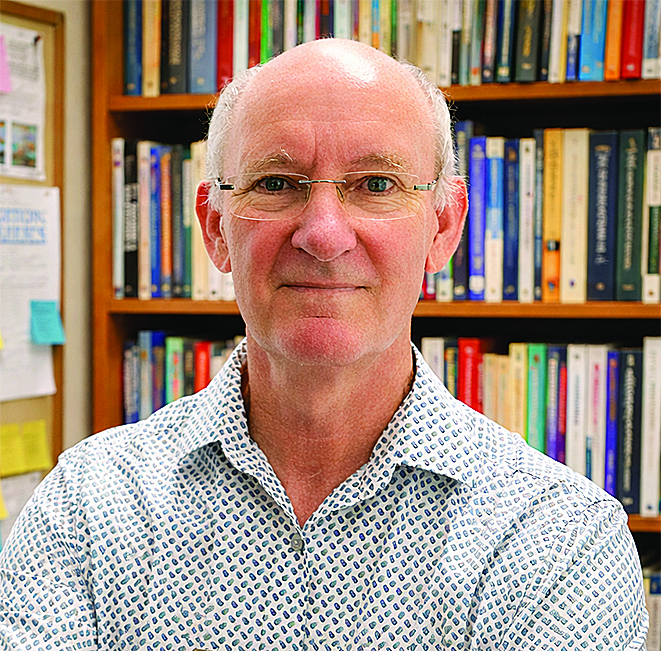
Professor John O’Neill is the Head of the Institute of Education Te Kura o Te Mātauranga at Massey University Te Kunenga Ki Pūrehuroa. Since 2006, he has held the position of Professor of Teacher Education, with research interests in the relationship between education policy and teachers’ professional work and learning, applied professional ethics, and teaching and learning in everyday settings.