
As the digital revolution continues to sweep through workplaces, classrooms and homes, it is our young people who remain the most vulnerable to harm. Whilst parents continue to look to schools and teachers to put boundaries in place, the struggle over screen time boundaries and behaviours continue at home.
Technology brings with it many benefits for convenience, choice, and connectivity, but unfortunately it can also be used to harm. Most modern online safety education focuses on teenagers, assuming the onset of smartphone use and social media sign ups is when the education needs to begin. But the use of devices for gaming and learning is now ubiquitous with pre-teens and younger children too, despite low awareness of the risks of being online and limited skills to participate safely on platforms and online spaces.
The reality is that many children often have free reign and unsupervised online access, despite parents and educators expressing concern around the digital presence many children appear to have. We must accept that being online is just a part of life, but without the proper education and safety practices in place, it can be an unsafe space that can impact the mental and physical well-being of tamariki.
The current climate
A study carried out by Netsafe shows that nearly four in ten New Zealand kids have had contact online with someone they didn’t know, and one in ten have gone on to meet someone in person who they first encountered online; 23 per cent of these children were under 11 years old.1
The research also revealed some significant differences between what parents thought children might be exposed to online versus what children actually reported seeing or experiencing.
Whilst issues around online activities and their repercussions are a constant and increasing source of concern for parents, up to 43 per cent of parents do not actively monitor the content, platforms or activities their children engage in online. Further research shows that younger children are not as digitally confident as most adults might think and it challenges the idea that children growing up now are instinctively ‘digital natives’ . . .
ʻThere is a gap in confidence between the youngest age group (9–11 years) compared to those aged 12 and older. For example . . . 9–11 year-olds are significantly less confident about knowing how to change their privacy settings and how to remove people from their contact list. They also show that, while comparatively higher, these younger children still have less knowledge of what kind of information should and shouldn’t be shared online than that of older children’.2
This suggests younger children may need more active help to protect their safety online and that the pre-teen age bracket is an important intervention period to help children develop online safety skills before their internet usage likely changes as they head into teenagehood.
In spite of many social media and gaming platforms having age restrictions (usually starting at age 13 years), the evidence indicates that developing online safety smarts should be considered a basic life skill that needs to be introduced when a child first starts interacting with digital technology, which is likely at a much younger age.
The need for age-appropriate education
Organisations like Netsafe have been partnering with New Zealand educators for a decade, showing schools how to be a supportive environment for young people to learn about positive online behaviours. There also seems to be an increasing sense from parents that schools are expected to lead the way, exacerbated by the step-change in the use of online technologies within the education system as a whole, in the post-pandemic era.
UNICEF’s report ‘Growing Up in a Connected World’3 suggests that tamariki aged ten and under are predominantly online for ‘entertainment’ purposes before progressing on the ‘ladder of online participation’ and engaging in the online world in increasingly more sophisticated ways to create, learn and grow. But even if only used for entertainment, the evidence paints a clear picture that there is a need to begin a programme of online safety education from the onset of school life.
Many teachers tap into the wide array of online resources and tools to support them in bringing such education to life in the classroom, but how does online safety education show up for the year groups that are typically overlooked? For the year groups who are deemed ‘too young to be online’?
Until now, there has been an obvious lack of dedicated, up-to-date and engaging online safety education resources for ākonga in Year 6 and under, and yet this age group is in fact actively online, with Netsafe consistently receiving helpline reports related to digital incidents involving children aged between five and nine.
A solution for 2024 and beyond
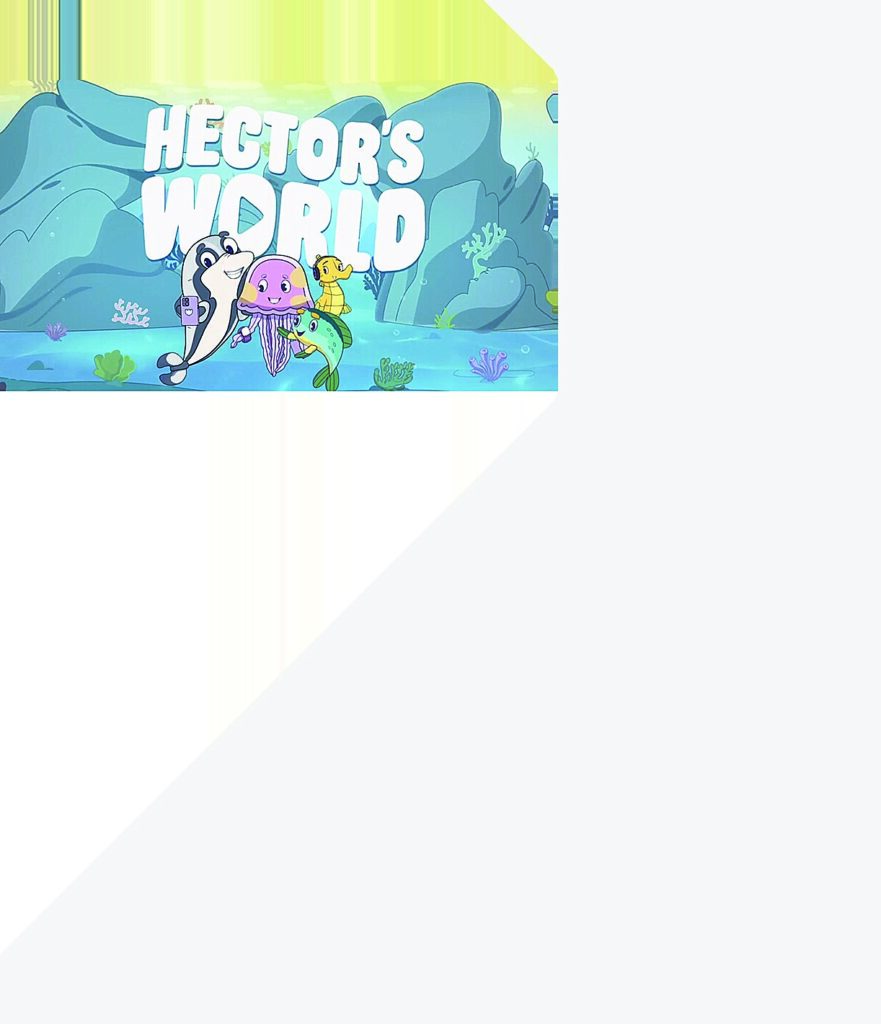
In early 2024, Netsafe will be launching a brand-new series of Hector’s World, an animated series first developed in 2007 that has been a staple in many classrooms over the years, exploring some basic digital citizenship behaviours relevant to ākonga in Years 1 to 6.
The original series of Hector’s World has been a trusted resource for schools, but as time has gone by and technology has developed the online challenges tamariki face have evolved; and so, work to bring Hector’s World up to date began.
Before commencing this work, Netsafe engaged with principals, teachers and educators across New Zealand and Australia to gather feedback and input on what they need from a new and improved series. This feedback (as well as advice from backers Ministry of Education and Microsoft) highlighted the online safety themes to incorporate, including:
-
Privacy, safety and security
-
Cyberbullying
-
Balance and wellbeing
-
Consent (related to sharing of videos and images)
-
Digital footprint
-
Misinformation
-
Digital citizenship
Each of the seven episodes present scenarios that empower the characters to make informed decisions online. The series has been written and produced to neatly balance education with entertainment, resulting in a child-friendly approach that fosters a positive and engaging learning experience.
The series will be available in both English and te reo Māori with optional subtitles and will be supported by over 50 downloadable classroom resources that have been designed and tested in collaboration with experienced educators.
Netsafe CEO Brent Carey says that by combining entertainment with essential lessons, the Hector’s World offering helps to equip kids with the tools to stay safe online.
ʻThe program’s success lies in its ability to make complex concepts accessible to young minds, encouraging a proactive approach to online safety from an early age. Principals can now act to ensure the online safety of our tamariki by using Hector’s World in their classes and promoting it to their school communities. The reality is that being online is integral to young people’s lives; equipping them with the skills to be aware and to be smart with their online behaviours will ensure they have safe and positive online experiences. Using these free online safety materials can significantly support students’ mental and physical wellbeing as they start to further explore the online world’.
Bridging the school and home environment
The resources that accompany Hector’s World have been designed for Years 0–3 and Years 4–6 and include lesson plans, classroom activities and worksheets, puzzles, games, colouring-in sheets and interactive online learning modules as well as a supporting learning recognition toolkit to optimise engagement with the materials.
Whilst schools do play a crucial role in delivering online safety education via the curriculum, Hector’s World also takes care of supporting and echoing this education in the home environment through a range of ‘take-it-home’ activities, worksheets and factsheets to encourage organic conversations about online safety and digital citizenship with parents and whānau. The episodes in the series can also be viewed at home, providing a great opportunity to reinforce learning in a fun and entertaining way outside of the classroom.
Danielle Vandendungen, Digital Security Engagement Advisor at The Ministry of Education, says that providing online safety education for tamariki supports their wellbeing and prepares them to be digital citizens.
‘We’re excited to see the beloved Hector’s World return refreshed with new videos and resources to support learning in English and Te Reo Māori. Netsafe have done a wonderful job using Hector’s World characters to help children navigate topics like cyber bullying, digital footprints, mis/disinformation and privacy – in fun and thought-provoking ways. We hope to see a new generation of children introduced to Hector’s World to become well-equipped digital citizens who can navigate the online landscape securely and responsibly.’
How to get Hector’s World in your school
Learn more about integrating Hector’s World into your school curriculum by contacting Netsafe () to request a Planning Pack which contains more information on the materials and how they can integrate with your local curriculum.
References
1 Factsheet: Parental awareness of children’s experiences of online risks and harm
()
2	Exploring New Zealand children’s technology access, use, skills and opportunities ()

3	Growing Up In A Connected World
()