
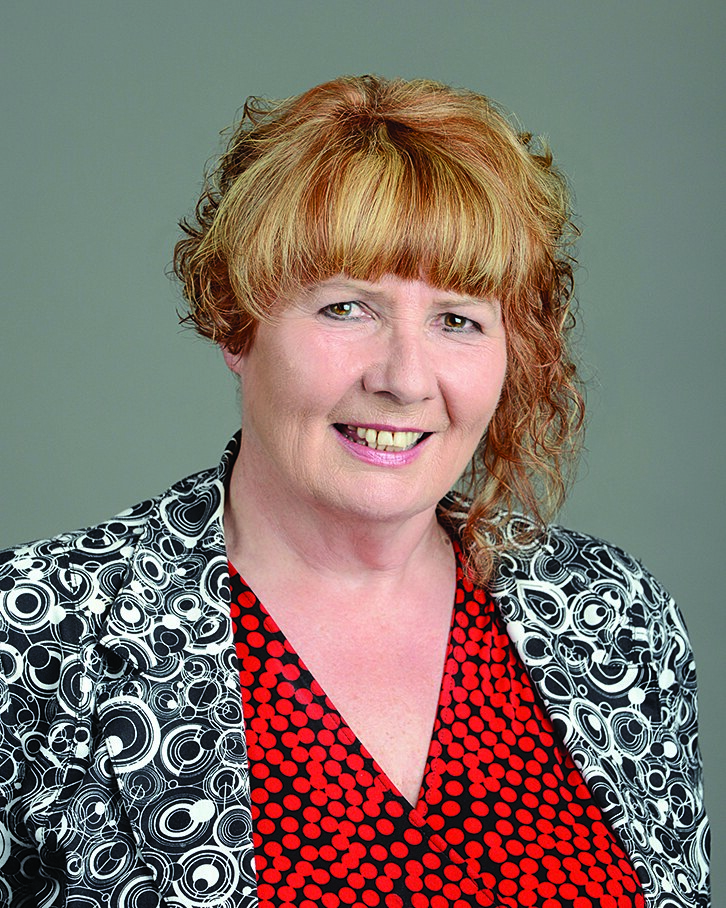
Editing the New Zealand Principal magazine has been an exhilarating experience for me these past fifteen years. I have visited your schools and classrooms, school fairs, special assemblies, farewell parties, sports days and pet days. I once witnessed the triumphant pride of an entire community, gathered at the pub on Stewart Island, to welcome home their medal winning year 8 athlete, who was bold enough to jump on the ferry to Invercargill and take on the best of his Southland age group. I leaned over a fence with a bunch of young kids, in the back paddock of Waituna West School in the Manawatū and watched the ‘school fundraisers’ being docked before shearing and slaughtering. I heard the story of Parihaka for the first time, from a seven year old at Newton School in Central Auckland. I saw democracy in action at Wakefield School in Nelson, as the kids voted on a choice of class pet – the bird or the rat – and tried hard to look excited when the rat won. I visited Hukanui school in Hamilton – a Green Gold award winning Enviroschool where a ‘sustainability classroom’ had just been completed – planned and designed by a student-led working group and a working model for environmental design, using natural light and heat. Prior to the earthquakes, I observed students’ art work at Branston Intermediate school in Christchurch, where ākonga were encouraged to project their inner emotions onto the canvas, with stunning results, and I have visited Mulberry Grove School on Great Barrier Island, where for lunch time fun, the senior students paddle the school kayaks to the wharf – when the ferry isn’t berthed – or a nearby point if it is – to go dive bombing or ‘pop a manu’ as is the more popular option now. Of the three schools on the Island, none has a swimming pool, so all converge on Mulberry Grove School and swimming sports are conducted in the bordering Tryphena harbour. I have reported on your conferences and the NZPF Moots and been warmly welcomed at your regional association events. For all of these experiences I am deeply grateful, and I thank you all.
I was appointed to my position in 2010, just as national standards were bedding in. This was at the height of the Global Education Reform Movement’s rise which was born of the neoliberal political agenda sweeping the globe at the time. Neolibralism is anathema to public services including public education and favours minimalist governments. We witnessed the weight of its influence on the 1984 Labour government, as public services were reduced and privatisation became the answer to every public problem such as the railways, electricity provision. infrastructure and so on. Neoliberalism claims that the market provides services so much more efficiently and the profits trickle down to create more jobs.
For education, it favours accountability systems such as national testing, to generate a measure of teacher performance which can then be applied to other mechanisms such as teacher performance pay. It leads to intense competition within and between schools and inevitably schools are publicly compared through published league tables. It is a system that has no interest in achieving equity and is born of individualism. It does not take a collective society view.
Consequently, we now have one of the biggest equity gaps in the OECD. This is the most ubiquitous problem facing our society, including education. With growing poverty, unemployment, housing issues, mental health issues, drug addiction, isolation, violence and trauma, schools report they are overwhelmed and under-resourced to cope with the growing number of children needing specialised help.
What has impressed me is how you adapt and change to accommodate what is in front of you every day. You can’t change what political decisions have imposed but you remain faithfully motivated to give every child the best education you possibly can, so out comes your creative hat. There are schools building vegetable gardens which become community gardens for the families of their children. Some have special programmes like the ‘Garden to Table’ programme, where children don’t just learn to prepare the gardens, plant them and grow them, they also learn to harvest the produce and cook meals. Schools are seeking to ‘trauma train’ their own teachers so they can better manage children experiencing trauma in their lives. Others use drama as a mechanism for young people to express their feelings in a safe way, through theatre. The list of innovative ways in which you lift the spirits of broken children every day is inexhaustible, and I have the greatest respect for you all.
Now, after 15 wonderful years, I say goodbye with a final thank you for inviting me into your schools and for all the inspirational stories you have shared with me, as Editor of your magazine. Those stories will reverberate well into my retirement years.
Kia kaha tatou.