
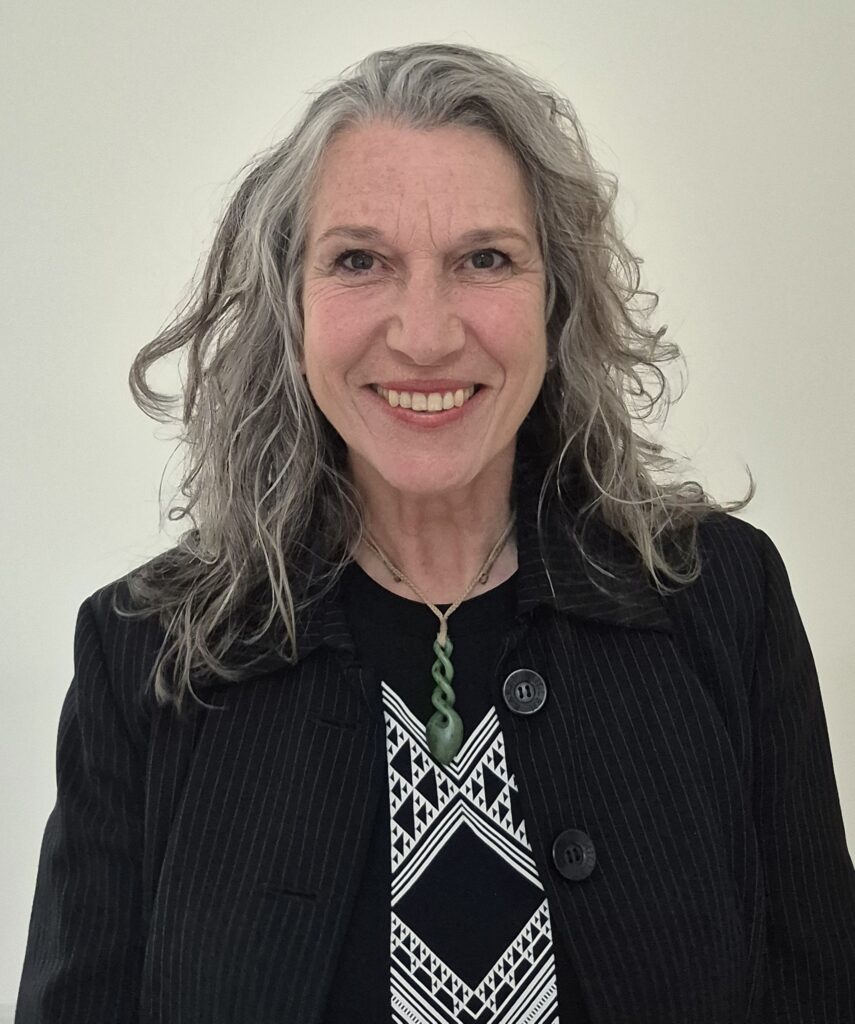
As Editor of the NZPF magazine, Liz Hawes has been tireless in highlighting the harms a neoliberal agenda brings to education and the benefits of collectivism so that schools and tamariki can thrive. Her wisdom, values and writing skills will be greatly missed – E mihi ana ki a koe e te mareikura.
In her final editorial, Liz describes the challenge of the equity gap we face in Aotearoa New Zealand, ‘This is the most ubiquitous problem facing our society, including education. With growing poverty, unemployment, housing issues, mental health issues, drug addiction, isolation, violence and trauma, schools report they are overwhelmed and under-resourced to cope with the growing number of children needing specialised help.’
This equity gap is apparent in my own kura. Our community is diverse, composed of beachside, farming, marae and village communities – the latter established to house the now closed Marsden Point refinery. These holidays some whānau are heading off for international holidays, others are moving to a smaller house so that they can afford the rent in our Northland beachside paradise. All of the issues Liz lists are challenges in our school community and our kaiako work hard to ensure that our kura culture provides a place where all tamariki are safe and valued so that they can learn and flourish.
Last year, one of my hardworking and skilled team leaders wrote down how they were feeling about their Year 6 classroom. This was written at night, when faced with the task of finding a reliever for a class that (like all of the classrooms in my kura) has a number of tamariki who are trauma impacted and/or neurodiverse and struggle significantly without CPR (Consistent Predictable Routines) and sometimes struggle even when those routines are in place.
What was written (shared with permission) is confronting:
It’s like someone has put a bomb in the room and said this has to stay here, don’t set it off, we will support you as best we can. Then you are not a qualified bomb dismantler. So you tip toe around the bomb trying not to set it off putting things in place that you hope will help. However you don’t know what is going to set it off. Inevitably you set the bomb off and it is removed. You then pick up the pieces left by the bomb, assess for collateral damage, tend to any wounds (of others never your own you don’t have time) settle anyone who was in the vicinity with reassurance (not that it won’t happen again because you can’t guarantee that) try to think about what set it off so you can avoid it in the future and then get ready because the bomb is being delivered back to you fully charged.
As you will know, this is not an uncommon experience. On the NZ Teacher’s Facebook page today, I saw this anonymous post:
Do you have a right to say no to teaching a student? Classes for 2026 are being made and I have been prepped to teach a Year 5 boy who has Autism and ORS and has 2 behaviours I am worried about . . . He has 2 hours of TA time per day. I am seriously considering leaving the school because of this fear.
This post was commented on by many teachers talking about how the school should be providing a full time TA and the rights of teachers to a healthy and safe work environment and a Principal’s responsibility to create such a space.
Those kaiako are right, we do have a responsibility to create a safe working environment for our staff. But given the insufficient funding for Learning Support and the increase in need amongst our tamariki, I am sure I am not the only principal for whom this has seemed to be an impossible challenge. For this reason, I knew we had to do something differently and the professional learning needed to start with me.
Our kura has been on a PB4L journey for a long time and for tamariki with secure attachment and self regulation capabilities, teaching our SHINE values and noticing and rewarding behaviour that meets those values is a successful tool. For tamariki who are neurodiverse and/or trauma impacted there is a growing body of research that tells us that we need more than behaviourism. Joe Brummer and Marg Thorsborne’s book Becoming a Trauma Informed Restorative Educator outlines ‘the degree to which behaviourism is entrenched across the education system. The unchallenged assumptions and beliefs about behaviour management that infuse PBIS, PBL, PB4L are examined. It is shown that these systems tend to reward students nurtured in privileged families and punish those who are experiencing trauma, further impeding educational outcomes.’
Recognising that we needed to understand Trauma Informed Education, I spent my wellbeing fund on attending the Trauma Informed Educators Conference in Brisbane. It reinforced what I already felt, that trauma impacted and neurodiverse tamariki are not deliberately choosing to wreck their classrooms and hurt others. As Nathan Mikaere-Wallis explains it, their brains are making predictions – based on past experience – about how safe they are in a situation. Their brain’s response is sometimes freeze, often flight and frequently fight. Our best strategy in that situation is to co-regulate and provide safety – not threaten dire consequences or promise rewards.
And so began our journey. Alongside significant investment of teacher time and energy in Structured Literacy learning, we have also invested in Restorative Practice PLD (funded by the MoE as part of PB4L schoolwide), Trauma Education from our MoE Psych and Mana Potential which we have funded ourselves.
Why Mana Potential? Because what can’t be bought from overseas is a model for supporting tamariki that is culturally relevant to Aotearoa New Zealand. Angeline McDonald co-authored the Mana Potential Model as an RTLB Māori (the irony is real!) and has since been employed by Waikato Uni. She is currently self-employed and returns later this month from presenting at the Indigenous Wellbeing Conference in Brisbane.
Over the last year, Angeline (Te Rarawa, Ngāpuhi) has supported kaiako and kaiāwhina to use the Mana Potential model to develop student’s self identity, to create a visual of tuku iho | cultural heritage, to understand where they come from, who stands beside them and who are their ‘go to people’ every day to support their regulation.
A year later, these are the words of the same team leader talking about the impact of Mana Potential in her classroom.
We have been exploring the concept ‘It’s bigger than me’ and creating digital versions of our Tuku Iho which we continue to use as a working document . . . we have been examining each of the Atua and discovering what each represents and how we can use these to express how we are feeling. It has been a rewarding experience and I have seen tangible positive impact in my classroom.
Last week for ‘Special Person Day’ we created a portrait of our special person using a paper plate and plasticine/clay. Some students had people come to visit but some didn’t . . . Those students who did have someone, worked with their person to create the portrait and an encouraging message. I asked those students who didn’t have someone come to think of someone that they want to make proud. We then brainstormed messages of encouragement that we would like to hear from our person. We used speech bubbles to write the messages and attached them to our portraits.
This idea came from our Tuku Iho and work we are doing around Mana Potential. I have one student who has lost her Dad. Her special person was her Dad, her message from him was ‘Remember, I’m always watching’ it brought tears to my eyes. Another student has had challenges this year, we have been working with this student and the whānau. Today this student’s Dad arrived and they worked away creating the portrait, the message Dad wrote is, ‘Never give up, keep going. Success doesn’t come without failure.’ It was a beautiful day and I just wanted to share the incredible impact Mana Potential is having for us.
Supporting our kaiako and kaiāwhina and keeping them safe while they support our tamariki is a challenge – Mana Potential is proving to be a significant tool in our kete.
Interested in exploring Mana Potential in your kura? Contact Angeline McDonald via email angelinem2@gmail.com