
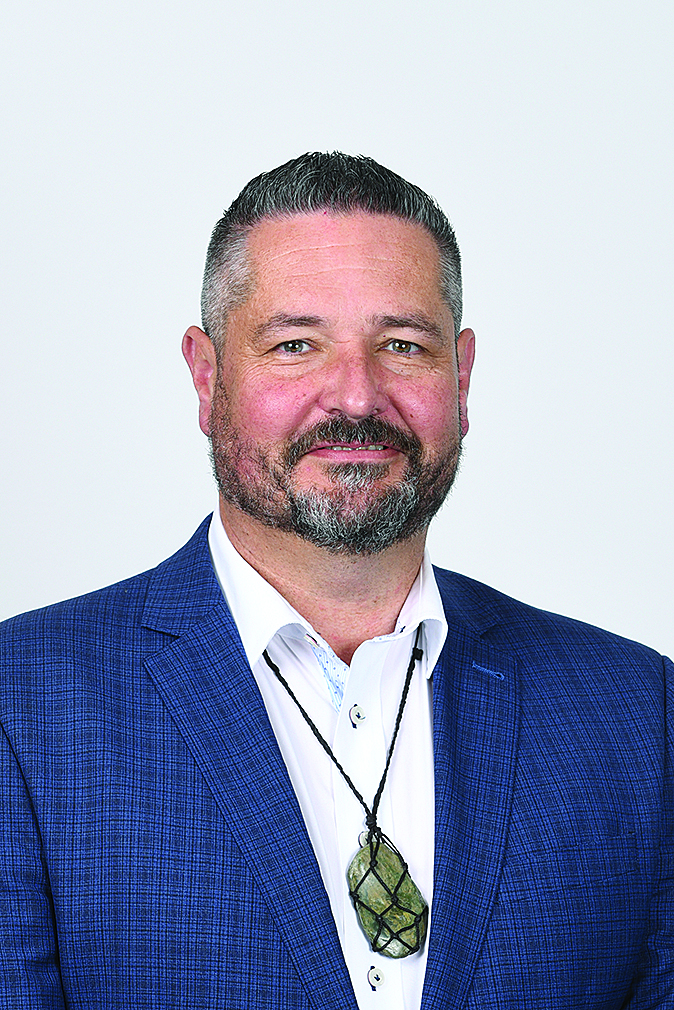
As we enter 2026 and I humbly begin serving NZPF in the President’s role, I find myself reflecting on “Ka mua, ka muri” – an important whakatauki that many will know means “walking backwards into the future”. It’s the idea we should look to the past to inform the future. In doing so, I am grateful to have the opportunity to continue the advocacy and hard work of the presidents and executive members before me, including our most recent president, Leanne Otene – what an important and lasting contribution Leanne made to our profession, ngā mihi nui Leanne.
When I entered the office for the first time this year, I sought out our very first NZ Principal magazine. Upon reading this first magazine, put out in the early 1980s, it both heartened me and saddened me. It was heartening to discover the pioneers of NZPF, such as our first president Tom Brown, state that “the busy last year has thrown onto the national stage a dispute over what constitutes success at school and how to measure it, and demand for training in principalship skills.” This statement also saddened me, for how far have we managed to address and support these areas over time?
For more than 40 years, New Zealand’s education policy has followed a predictable pattern: diagnose crises, promise reform, implement standardised testing, change government, and repeat. In this magazine, NZPF Senior Researcher Dr Kim Hailwood analyses how this cycle persists regardless of which party holds power, raising fundamental questions about whether we’re measuring what matters in education.
The pattern emerges
The rhetoric over time is remarkably consistent. In 1978, Prime Minister Robert Muldoon lamented “insufficient attention to basics.” In 2008, John Key launched a “crusade” for literacy and numeracy. In 2017 Chris Hipkins claimed his Education Amendment Bill was grounded in research. By 2023, Erica Stanford declared the system “bordering on crisis.” Each government frames its predecessor’s approach as ideological failure while positioning its own reforms as evidence-based salvation.
The policy responses follow suit. National introduced National Standards in 2010, mandating systematic assessments and plain English reporting to parents. Labour abolished them in 2017, arguing they increased workload without improving outcomes. By 2024, National reintroduced the work to potentially enforce standardised testing by creating the “SMART” tool, echoing the same justifications used fourteen years earlier.
What gets lost in translation
Beneath these policy swings lies a more troubling pattern: successive reforms have failed to deliver promised improvements. A 2013 Massey University report found New Zealand’s reading achievement showed no significant improvement between 2001 and 2011, despite years of various interventions. The equity gap, consistently cited as justification for reform, has remained among the widest in the OECD.
How much does this failure stem from treating symptoms rather than causes? When education becomes primarily about data points and league tables, when schools operate as service providers and students as productivity units, fundamental questions get sidelined. What is education actually for? Are we fostering critical thinking, communication and problem solving or teaching to tests? Are we nurturing potential or merely sorting students by achievement?
The reform-measurement trap
Each reform cycle promises greater accountability and transparency through measurement. Our relentless focus on measuring achievement may distract from addressing the structural inequities that measurement merely exposes. No amount of standardised testing resolves issues of poverty, resource inequality, or systemic disadvantage that affect educational outcomes. We have, as a nation, constantly reverted to basics, benchmarks, and standardised assessment, prioritising what’s easily measured rather than focussing on what’s genuinely valuable. That is, teachers using formative assessment to discover next steps learning for individuals and groups, providing teaching and support for the next steps, and measuring the individual progress for each student. I believe this is the teaching and assessment sequence in every classroom that ultimately makes the greatest difference to ongoing achievement.
Breaking the cycle
For education professionals currently navigating yet another reform wave, this history offers a crucial perspective. The question isn’t which testing regime works best, but whether our persistent reliance on measurement-driven reform serves education’s deeper purposes. Until policymakers address the structural factors underlying educational inequality, rather than repeatedly reshuffling assessment framework, New Zealand’s reform cycle will likely continue its familiar rotation, promising transformation while delivering more of the same. My hope is that our Minister of Education will bring together educational sector leaders, experienced practitioners and education spokespeople from all parties in 2026 to work in partnership around the aspects of education that, if then left untouched by successive governments, would make the most difference for our children and ultimately our country going forward. That would mean we would have a true Minister for Education rather than merely a Minister of Education.
The purpose of school is not to be good at school.
The purpose of school is to prepare students for life.
While I am writing this piece in mid-January, I am aware it won’t be published until March! I know that you will have brought your teams together for professional learning, team building, and organisational decisions well before the children arrived. Your work in preparing and supporting your teams to be ready for the beginning of each new year cannot be understated. Your leadership is essential to the success of schools and the learning and wellbeing of your children as effective school leaders lead to school effectiveness which, in turn, leads to better outcomes for children. Yes, we have ongoing challenges to navigate again in 2026, but know that your work matters, your support matters, and your connection with your colleagues in the schools close to you and in your region matters. While you may feel very alone in the principal role at times, make sure you reach out to others, participate in regional meetings and professional learning, and continue to meet with each other informally as well when you can.
A special acknowledgement and congratulations to those principals who are beginning their principalship in 2026 – welcome to the most amazingly diverse job! All tumuaki of Aotearoa – always remember your regional presidents, experienced local colleagues and we at NZPF are here for you.